Odds, probability, and value describe different parts of a market. Understanding the difference helps you read the table without confusing a displayed sportsbook price with the market’s estimate of how likely a result is.
Change the way prices are displayed
- Find Odds view near the bottom of the sidebar.
- Choose American to see prices such as -110 or +150, or Implied probability to see the equivalent percentages.
- Return to your table. The display preference applies across the research workspaces and is saved in this browser.
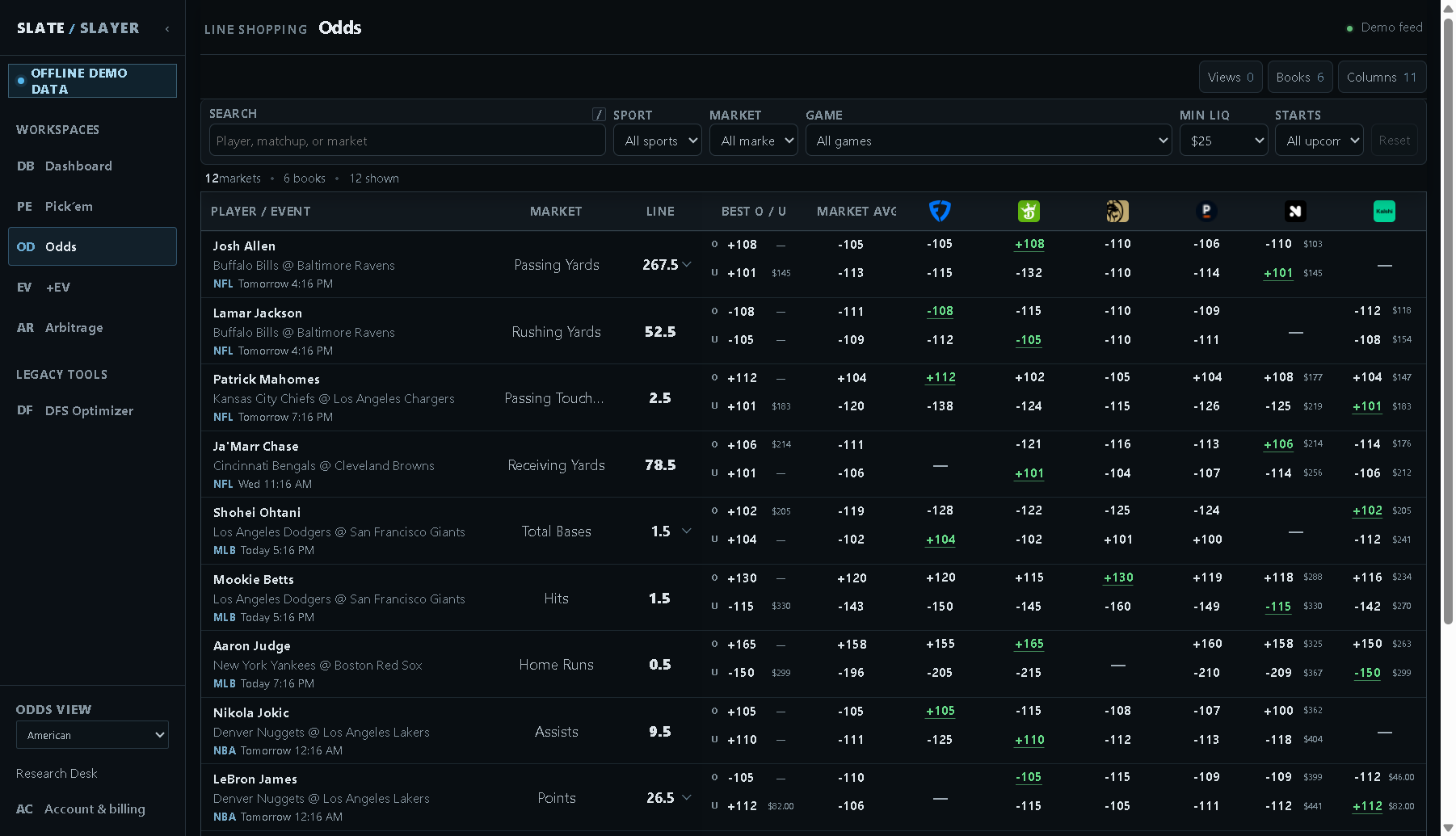
Illustrative demo data: American odds describe the payout price.
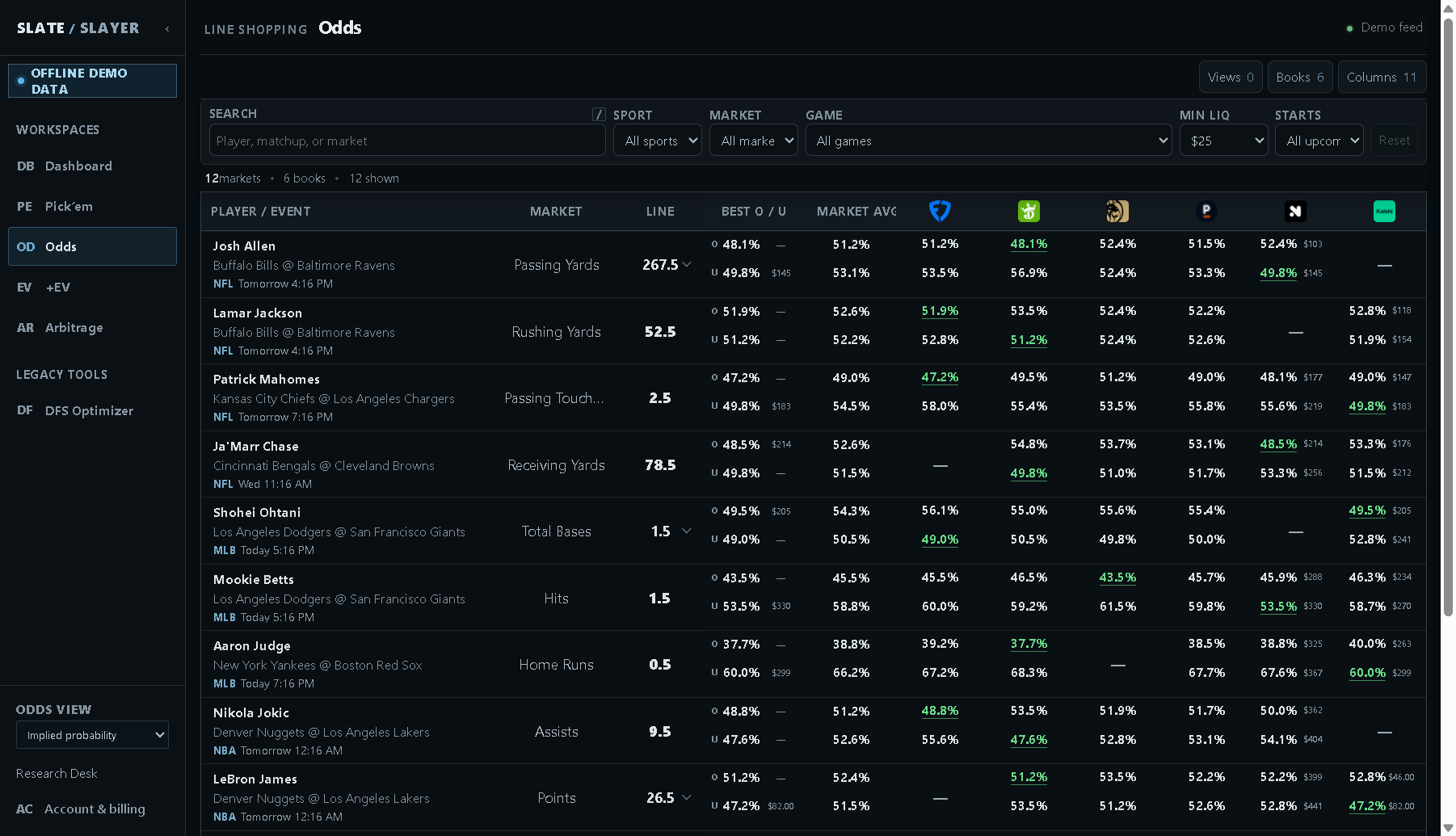
Illustrative demo data: changing Odds view changes the presentation, not the underlying market.
Read American odds
+150 means a $100 winning stake earns $150 profit, before any external fees. -150 means a $150 winning stake earns $100 profit. Returned stake is separate from profit.
Implied probability converts the offered price into a break-even percentage: +150 is 40%; -150 is 60%; -110 is about 52.4%. A sportsbook’s Over and Under percentages often add to more than 100% because of its margin.
Know which percentage you are reading
| Label | Meaning |
|---|---|
| Implied probability | A conversion of an offered price. It does not remove the sportsbook’s margin. |
| Fair probability / Fair | An estimate built from qualifying two-sided prices with margin removed, then combined across contributors. It is an estimate, not a known true probability. |
| Pick’em Edge | Fair probability minus 50%, measured in percentage points. A 56.2% fair estimate gives +6.2% Edge. |
| EV | Estimated return per unit staked at an offered price. This uses the fair estimate and payout, not simply the percentage above 50%. |
| Arbitrage ROI | Calculated profit divided by the combined stake for both legs. |
For example, a 60% fair estimate at +100 implies 20% expected return: 0.60 × 2.00 − 1 = 0.20. That example describes repeated outcomes under the estimate; an individual bet can still lose. On integer lines, displayed EV is conditional on the bet not pushing.
A complete Pick’em slip also depends on the provider’s payout and entry rules. The leg’s Edge alone does not calculate that slip’s expected return.